Why Sustainable Production Matters Now
Why Sustainable Production Matters Now
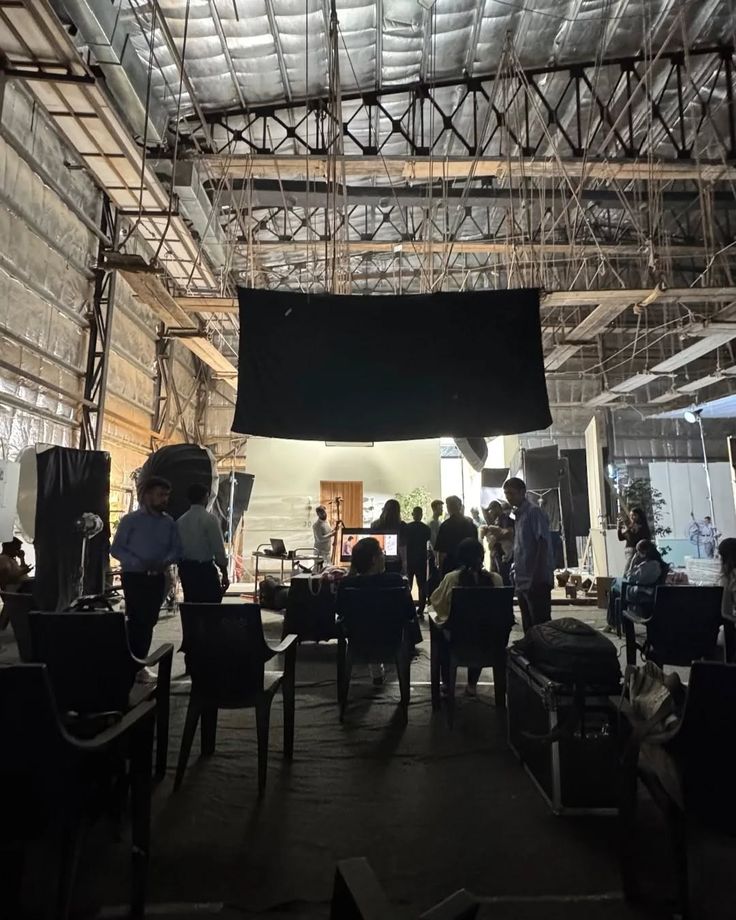
Sustainability on set isn't a new idea, but it's stopped being optional. Coalitions and standards across the industry are formalizing what used to be individual good intentions production-wide checklists that ask every department, from art to wardrobe to catering, to submit a waste and sourcing plan before a single light gets rigged. The direction is the same everywhere: sustainability planning has moved from a nice-to-have bolted on at the end to a line item that belongs in pre-production, next to the schedule and the budget.
For a production house working across branded content, live events, and large-scale sports and gaming activations, that shift matters even more than it might for a single feature shoot. We're not producing once and moving on we're on set constantly, across cities, for brands whose own customers are increasingly asking: what did this cost the planet to make?
What Does Responsible Production Actually Involve? (7 Core Practices)
Sustainability on a shoot isn't one big gesture. It's a series of smaller, unglamorous decisions made early enough that they don't feel like compromises later.
1. Plan sustainability in pre-production, not on the day
The biggest sustainability decisions on any production are made in prep what gets built versus rented, what gets sourced locally versus flown in, how many trucks a location actually needs. Trying to green a shoot on the day is like trying to change the color grade during the shoot itself. It's too late to change the fundamentals.
2. Design sets to be taken apart, not just torn down
Building with reuse in mind is a design choice modular flats, screws instead of nails, materials that can be broken back down into their original pieces rather than reduced to landfill. A set that can be disassembled can also be rebuilt, rented out again, or donated to a theatre group or film school instead of skipped.
3. Go paperless across call sheets and contracts
Call sheets, timecards, contracts, even continuity notes there's little reason left for any of it to exist on paper. Digital workflows aren't just greener; they update faster when a schedule shifts, which on most shoots is more often than anyone would like.
4. Source locally wherever possible
Catering from nearby vendors, props and costumes sourced or rented locally rather than shipped in, crew hired from the region a shoot is in rather than flown across the country all of this cuts transport emissions, and keeps money spent on a production closer to the community hosting it.
5. Plan power use instead of defaulting to it
Diesel generators running through the night out of habit, rather than necessity, are one of the easiest places to cut both cost and emissions. Hybrid power setups, battery packs for smaller setups, and simply switching equipment off between takes make a measurable difference over a multi-day shoot.
6. Assign clear ownership
The productions that follow through, rather than just intend to, are the ones where sustainability is somebody's job in prep not an afterthought handed to whoever's free. Even on a leaner shoot, that can mean one person on the production team tracking waste and sourcing decisions, the same way someone owns the schedule or the budget.
7. Adapt the approach to the format
A studio branded shoot, a multi-day live event, and a documentary on location each carry different sustainability risks. A single generic checklist doesn't work across all three the plan has to match the production type.
How Frizzon Applies This Across Different Production Formats
We work across branded films, TVCs, documentaries, live sports coverage, and gaming activations — formats that don't share a single production template. A studio-based branded shoot has almost nothing in common, logistically, with livestreaming a multi-day event across fourteen camera feeds. Which means sustainable production can't be one checklist applied everywhere. It has to flex with the brief:
Studio shoots: a fully digital paper trail, and sets built to be reused on the next brand film.
Live events: power distribution planned to avoid running excess generator capacity across a multi-day activation, and local vendors used for rigging and catering instead of trucking everything in.
Documentaries on location: working with communities and spaces the way we'd want a crew to work if they showed up in ours minimal footprint, maximum respect for what was there before we arrived.
None of this is about slowing a production down or making it more expensive by default. Most of it is the opposite: reused materials cost less than new ones, a digital call sheet is cheaper than a reprinted one, and a generator that isn't running all night is a generator you're not paying to fuel.
Does Sustainable Production Cost More?
Not by default most sustainable practices reduce cost rather than add it. Reused or rented set materials are cheaper than new builds, digital paperwork removes reprinting costs, and planned power use lowers fuel spend. The practices that do carry upfront cost, like hiring a dedicated sustainability lead on a large production, are the exception rather than the rule, and are usually justified only at scale.
The Part That's Easy to Miss
There's a quieter argument for all of this, separate from cost or compliance. What gets made on screen has a way of shaping what feels normal off it. A brand film, a documentary, a livestream — none of it exists in a vacuum from the audience watching it. Productions that take sustainability seriously behind the camera are, in a small way, part of shifting what audiences expect to be normal in front of it too.
We don't think every shoot needs a sustainability consultant on the call sheet or a zero-waste target written into the contract to count as responsible. We do think every shoot benefits from someone asking, in prep, "does this actually need to be built new, printed, driven in, or run all night?" and being willing to answer that honestly, even when the easy answer is to do it the way it's always been done.
That's the standard we're trying to hold ourselves to. Not a perfect one. A responsible one.
Sustainability on set isn't a new idea, but it's stopped being optional. Coalitions and standards across the industry are formalizing what used to be individual good intentions production-wide checklists that ask every department, from art to wardrobe to catering, to submit a waste and sourcing plan before a single light gets rigged. The direction is the same everywhere: sustainability planning has moved from a nice-to-have bolted on at the end to a line item that belongs in pre-production, next to the schedule and the budget.
For a production house working across branded content, live events, and large-scale sports and gaming activations, that shift matters even more than it might for a single feature shoot. We're not producing once and moving on we're on set constantly, across cities, for brands whose own customers are increasingly asking: what did this cost the planet to make?
What Does Responsible Production Actually Involve? (7 Core Practices)
Sustainability on a shoot isn't one big gesture. It's a series of smaller, unglamorous decisions made early enough that they don't feel like compromises later.
1. Plan sustainability in pre-production, not on the day
The biggest sustainability decisions on any production are made in prep what gets built versus rented, what gets sourced locally versus flown in, how many trucks a location actually needs. Trying to green a shoot on the day is like trying to change the color grade during the shoot itself. It's too late to change the fundamentals.
2. Design sets to be taken apart, not just torn down
Building with reuse in mind is a design choice modular flats, screws instead of nails, materials that can be broken back down into their original pieces rather than reduced to landfill. A set that can be disassembled can also be rebuilt, rented out again, or donated to a theatre group or film school instead of skipped.
3. Go paperless across call sheets and contracts
Call sheets, timecards, contracts, even continuity notes there's little reason left for any of it to exist on paper. Digital workflows aren't just greener; they update faster when a schedule shifts, which on most shoots is more often than anyone would like.
4. Source locally wherever possible
Catering from nearby vendors, props and costumes sourced or rented locally rather than shipped in, crew hired from the region a shoot is in rather than flown across the country all of this cuts transport emissions, and keeps money spent on a production closer to the community hosting it.
5. Plan power use instead of defaulting to it
Diesel generators running through the night out of habit, rather than necessity, are one of the easiest places to cut both cost and emissions. Hybrid power setups, battery packs for smaller setups, and simply switching equipment off between takes make a measurable difference over a multi-day shoot.
6. Assign clear ownership
The productions that follow through, rather than just intend to, are the ones where sustainability is somebody's job in prep not an afterthought handed to whoever's free. Even on a leaner shoot, that can mean one person on the production team tracking waste and sourcing decisions, the same way someone owns the schedule or the budget.
7. Adapt the approach to the format
A studio branded shoot, a multi-day live event, and a documentary on location each carry different sustainability risks. A single generic checklist doesn't work across all three the plan has to match the production type.
How Frizzon Applies This Across Different Production Formats
We work across branded films, TVCs, documentaries, live sports coverage, and gaming activations — formats that don't share a single production template. A studio-based branded shoot has almost nothing in common, logistically, with livestreaming a multi-day event across fourteen camera feeds. Which means sustainable production can't be one checklist applied everywhere. It has to flex with the brief:
Studio shoots: a fully digital paper trail, and sets built to be reused on the next brand film.
Live events: power distribution planned to avoid running excess generator capacity across a multi-day activation, and local vendors used for rigging and catering instead of trucking everything in.
Documentaries on location: working with communities and spaces the way we'd want a crew to work if they showed up in ours minimal footprint, maximum respect for what was there before we arrived.
None of this is about slowing a production down or making it more expensive by default. Most of it is the opposite: reused materials cost less than new ones, a digital call sheet is cheaper than a reprinted one, and a generator that isn't running all night is a generator you're not paying to fuel.
Does Sustainable Production Cost More?
Not by default most sustainable practices reduce cost rather than add it. Reused or rented set materials are cheaper than new builds, digital paperwork removes reprinting costs, and planned power use lowers fuel spend. The practices that do carry upfront cost, like hiring a dedicated sustainability lead on a large production, are the exception rather than the rule, and are usually justified only at scale.
The Part That's Easy to Miss
There's a quieter argument for all of this, separate from cost or compliance. What gets made on screen has a way of shaping what feels normal off it. A brand film, a documentary, a livestream — none of it exists in a vacuum from the audience watching it. Productions that take sustainability seriously behind the camera are, in a small way, part of shifting what audiences expect to be normal in front of it too.
We don't think every shoot needs a sustainability consultant on the call sheet or a zero-waste target written into the contract to count as responsible. We do think every shoot benefits from someone asking, in prep, "does this actually need to be built new, printed, driven in, or run all night?" and being willing to answer that honestly, even when the easy answer is to do it the way it's always been done.
That's the standard we're trying to hold ourselves to. Not a perfect one. A responsible one.