Why Previsualization Matters in Sports Productions
Why Previsualization Matters in Sports Productions
When people think about large-scale sports productions, they picture cameras, athletes, stadiums, and the final film.
They rarely think about the work that happens before any of those come together.
Before the crew arrives. Before the first shot is framed. Before an athlete steps onto the field.
Every successful production begins with a clear visual plan.
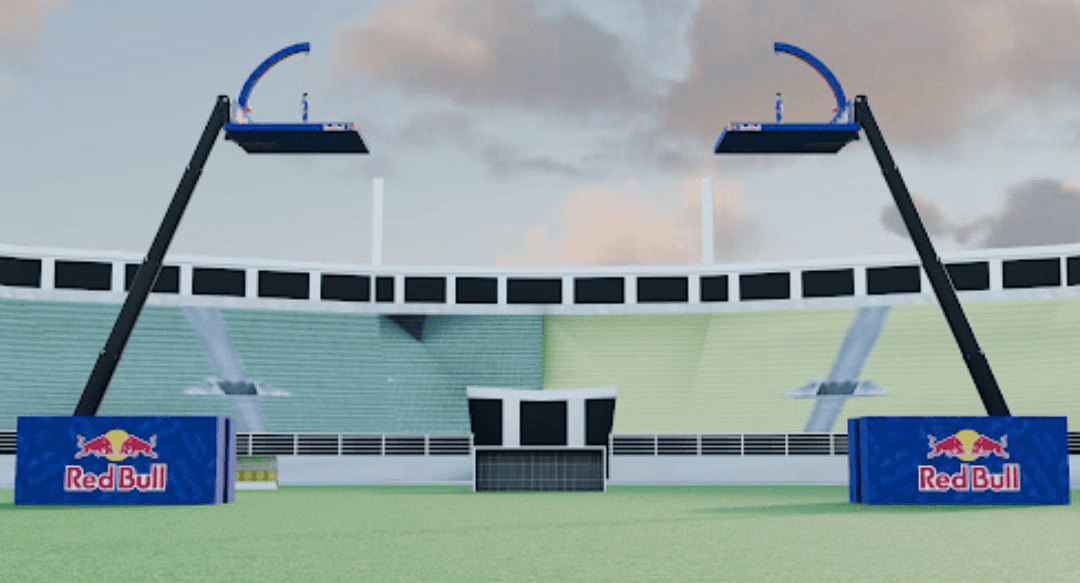
For the Red Bull Football Challenge 2026, featuring Neymar Jr. and some of the world's top footballers, Frizzon Productions contributed to the project long before production began by creating the 3D previsualization renders that helped the creative team visualise the experience before it became reality.
Why Previsualization Has Become Essential in Commercial Production
Large-scale productions leave very little room for guesswork.
When international athletes, complex challenge setups, multiple departments, and tight production schedules come together, every creative decision has a ripple effect.
That's where previsualization, often referred to as previs, becomes an essential part of the production process.
Instead of discussing ideas through sketches or written briefs, teams can review realistic visual representations of the set, camera placements, layouts, and production environment before a single piece of equipment reaches the location.
It allows everyone involved, from creative teams to production, to work from the same visual reference.
Building the Production Before It Exists
For the Red Bull Football Challenge 2026, Frizzon's role was to create detailed previsualization renders that translated creative concepts into visual assets the production team could plan around.
The objective wasn't simply to create attractive 3D images.
The renders needed to communicate scale, spatial relationships, and how different elements of the production would fit together.
Long before cameras captured Neymar Jr. taking on football challenges, the production already had a visual roadmap.
That clarity helps creative discussions become production decisions.
Why Renders Save More Than Time
One of the biggest misconceptions about previsualization is that it's only a presentation tool.
In reality, it's a production tool.
When teams can visualise a project early, they spend less time interpreting creative intent during production.
Questions that would normally arise on set can often be answered during planning.
The result isn't necessarily a faster production.
It's a more predictable one.
For large commercial shoots involving multiple stakeholders, that alignment becomes just as valuable as the production itself.
Behind the Scenes at Frizzon
Creating production renders requires more than technical software skills.
Every visual decision has to consider how the final production will function in the real world.
The renders need to balance creative ambition with practical execution, ensuring the proposed layouts can ultimately support the production they're representing.
For projects like the Red Bull Football Challenge 2026, previsualization becomes the bridge between an idea and its execution.
It's one of the few stages where creative possibilities can be explored, refined, and communicated before production resources are committed.
When done well, the audience never notices the renders.
They simply experience a production that feels intentional from beginning to end.
What This Project Reinforced
Working on the Red Bull Football Challenge 2026 reinforced something we continue to see across commercial productions at Frizzon Productions.
Great productions don't begin on shoot day.
They begin during planning.
The stronger the visual communication before production, the fewer assumptions teams need to make once the cameras start rolling.
As commercial campaigns become larger and involve more collaborators, previsualization is no longer just a design deliverable.
It's a production strategy.
Because sometimes the most important part of filmmaking isn't capturing the vision.
It's making sure everyone shares the same one before production begins.
When people think about large-scale sports productions, they picture cameras, athletes, stadiums, and the final film.
They rarely think about the work that happens before any of those come together.
Before the crew arrives. Before the first shot is framed. Before an athlete steps onto the field.
Every successful production begins with a clear visual plan.
For the Red Bull Football Challenge 2026, featuring Neymar Jr. and some of the world's top footballers, Frizzon Productions contributed to the project long before production began by creating the 3D previsualization renders that helped the creative team visualise the experience before it became reality.
Why Previsualization Has Become Essential in Commercial Production
Large-scale productions leave very little room for guesswork.
When international athletes, complex challenge setups, multiple departments, and tight production schedules come together, every creative decision has a ripple effect.
That's where previsualization, often referred to as previs, becomes an essential part of the production process.
Instead of discussing ideas through sketches or written briefs, teams can review realistic visual representations of the set, camera placements, layouts, and production environment before a single piece of equipment reaches the location.
It allows everyone involved, from creative teams to production, to work from the same visual reference.
Building the Production Before It Exists
For the Red Bull Football Challenge 2026, Frizzon's role was to create detailed previsualization renders that translated creative concepts into visual assets the production team could plan around.
The objective wasn't simply to create attractive 3D images.
The renders needed to communicate scale, spatial relationships, and how different elements of the production would fit together.
Long before cameras captured Neymar Jr. taking on football challenges, the production already had a visual roadmap.
That clarity helps creative discussions become production decisions.
Why Renders Save More Than Time
One of the biggest misconceptions about previsualization is that it's only a presentation tool.
In reality, it's a production tool.
When teams can visualise a project early, they spend less time interpreting creative intent during production.
Questions that would normally arise on set can often be answered during planning.
The result isn't necessarily a faster production.
It's a more predictable one.
For large commercial shoots involving multiple stakeholders, that alignment becomes just as valuable as the production itself.
Behind the Scenes at Frizzon
Creating production renders requires more than technical software skills.
Every visual decision has to consider how the final production will function in the real world.
The renders need to balance creative ambition with practical execution, ensuring the proposed layouts can ultimately support the production they're representing.
For projects like the Red Bull Football Challenge 2026, previsualization becomes the bridge between an idea and its execution.
It's one of the few stages where creative possibilities can be explored, refined, and communicated before production resources are committed.
When done well, the audience never notices the renders.
They simply experience a production that feels intentional from beginning to end.
What This Project Reinforced
Working on the Red Bull Football Challenge 2026 reinforced something we continue to see across commercial productions at Frizzon Productions.
Great productions don't begin on shoot day.
They begin during planning.
The stronger the visual communication before production, the fewer assumptions teams need to make once the cameras start rolling.
As commercial campaigns become larger and involve more collaborators, previsualization is no longer just a design deliverable.
It's a production strategy.
Because sometimes the most important part of filmmaking isn't capturing the vision.
It's making sure everyone shares the same one before production begins.