Why Frizzon Cooks Dal-Chawal for Its Team Every Day
Why Frizzon Cooks Dal-Chawal for Its Team Every Day
The hardest part of moving to a new city for work is often not the work. It is everything around it.
Where do you stay? How do you commute? What do you eat after a long day? And when work gets busy, which of those things simply gets ignored?
For a lot of young people who move to Mumbai for work, food becomes one of those daily decisions that never quite gets sorted. At Frizzon Productions, we saw this happening within our own team. So we started cooking dal-chawal.
Every day.
Moving to Mumbai Means Building a New Routine
A large part of the team at Frizzon isn't originally from Mumbai. People have moved here from smaller cities, live away from their families, and are figuring out life in a new city alongside their careers.
It is an experience I understand personally. When I first started working in Mumbai, food was something I never really managed to sort out either.
You get busy. Lunch gets delayed. You order whatever is convenient. Some days, chai starts replacing actual meals. When we began seeing versions of the same routine within our team, there wasn't a big conversation about company culture or employee benefits.
The problem was much simpler. People needed proper food.
So We Started Making Dal-Chawal
At Frizzon, dal-chawal is cooked in-house every day. It isn't catered or ordered from a restaurant. It is simple, everyday food made at the office for the people working there.
The idea started because we wanted to remove one small decision from everyone's day. Instead of figuring out what to order, waiting for deliveries or eating junk because it was convenient, there would always be something familiar available.
Dal. Chawal. Ghar ka khana. That was it.
Then It Became Part of Frizzon
Over time, something interesting happened. People who didn't usually eat dal-chawal started having a plate.
Then it wasn't only the team. A client might be at the office for a meeting around lunchtime. A director might be visiting. Someone might have dropped by to discuss an upcoming production.
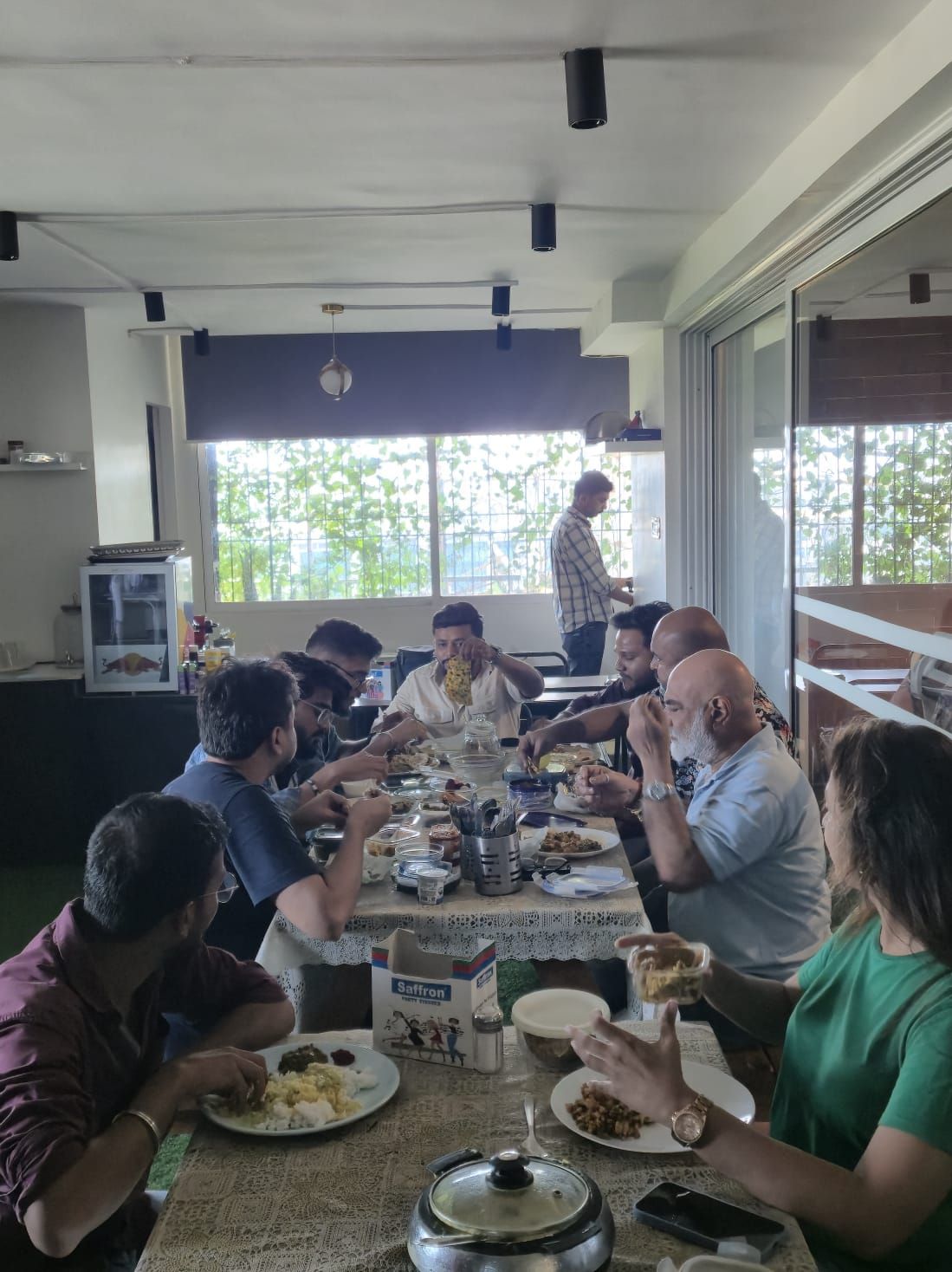
Eventually, they would end up eating too. There is no separate arrangement or elaborate lunch meeting. People simply sit together and eat what has been cooked that day.
In an industry where schedules constantly change and production days can become hectic very quickly, that everyday routine has become surprisingly important to us.
Production Culture Is Built in the Ordinary Moments
When people talk about culture at a production house, the conversation usually revolves around the work. The films you make. The sets you build. The directors you work with. The brands on your roster.
But after running Frizzon Productions, I've realised that culture is also built through much smaller decisions.
What happens between meetings? What happens when someone has had a long morning? What happens when the team has been working for hours and it is suddenly 2 PM?
These moments don't appear in a showreel, but they shape what it feels like to work somewhere. Our dal-chawal wasn't introduced as a culture initiative. It became part of our culture because it solved a very ordinary problem consistently.
One Table, Whoever Is Around
Perhaps my favourite part of this routine is that there isn't much hierarchy around it. If you're around when lunch is being served, you can eat.
Team members, clients, directors and people visiting for meetings have all ended up around the same table. And for a little while, the conversation isn't necessarily about treatments, budgets, schedules or the next shoot.
It is just lunch. For people who have moved away from their families to build careers in Mumbai, there is something comforting about that.
Not because dal-chawal can replace home. But because, on a busy workday, ghar ka khana can make being away from ghar feel a little easier.
The hardest part of moving to a new city for work is often not the work. It is everything around it.
Where do you stay? How do you commute? What do you eat after a long day? And when work gets busy, which of those things simply gets ignored?
For a lot of young people who move to Mumbai for work, food becomes one of those daily decisions that never quite gets sorted. At Frizzon Productions, we saw this happening within our own team. So we started cooking dal-chawal.
Every day.
Moving to Mumbai Means Building a New Routine
A large part of the team at Frizzon isn't originally from Mumbai. People have moved here from smaller cities, live away from their families, and are figuring out life in a new city alongside their careers.
It is an experience I understand personally. When I first started working in Mumbai, food was something I never really managed to sort out either.
You get busy. Lunch gets delayed. You order whatever is convenient. Some days, chai starts replacing actual meals. When we began seeing versions of the same routine within our team, there wasn't a big conversation about company culture or employee benefits.
The problem was much simpler. People needed proper food.
So We Started Making Dal-Chawal
At Frizzon, dal-chawal is cooked in-house every day. It isn't catered or ordered from a restaurant. It is simple, everyday food made at the office for the people working there.
The idea started because we wanted to remove one small decision from everyone's day. Instead of figuring out what to order, waiting for deliveries or eating junk because it was convenient, there would always be something familiar available.
Dal. Chawal. Ghar ka khana. That was it.
Then It Became Part of Frizzon
Over time, something interesting happened. People who didn't usually eat dal-chawal started having a plate.
Then it wasn't only the team. A client might be at the office for a meeting around lunchtime. A director might be visiting. Someone might have dropped by to discuss an upcoming production.
Eventually, they would end up eating too. There is no separate arrangement or elaborate lunch meeting. People simply sit together and eat what has been cooked that day.
In an industry where schedules constantly change and production days can become hectic very quickly, that everyday routine has become surprisingly important to us.
Production Culture Is Built in the Ordinary Moments
When people talk about culture at a production house, the conversation usually revolves around the work. The films you make. The sets you build. The directors you work with. The brands on your roster.
But after running Frizzon Productions, I've realised that culture is also built through much smaller decisions.
What happens between meetings? What happens when someone has had a long morning? What happens when the team has been working for hours and it is suddenly 2 PM?
These moments don't appear in a showreel, but they shape what it feels like to work somewhere. Our dal-chawal wasn't introduced as a culture initiative. It became part of our culture because it solved a very ordinary problem consistently.
One Table, Whoever Is Around
Perhaps my favourite part of this routine is that there isn't much hierarchy around it. If you're around when lunch is being served, you can eat.
Team members, clients, directors and people visiting for meetings have all ended up around the same table. And for a little while, the conversation isn't necessarily about treatments, budgets, schedules or the next shoot.
It is just lunch. For people who have moved away from their families to build careers in Mumbai, there is something comforting about that.
Not because dal-chawal can replace home. But because, on a busy workday, ghar ka khana can make being away from ghar feel a little easier.